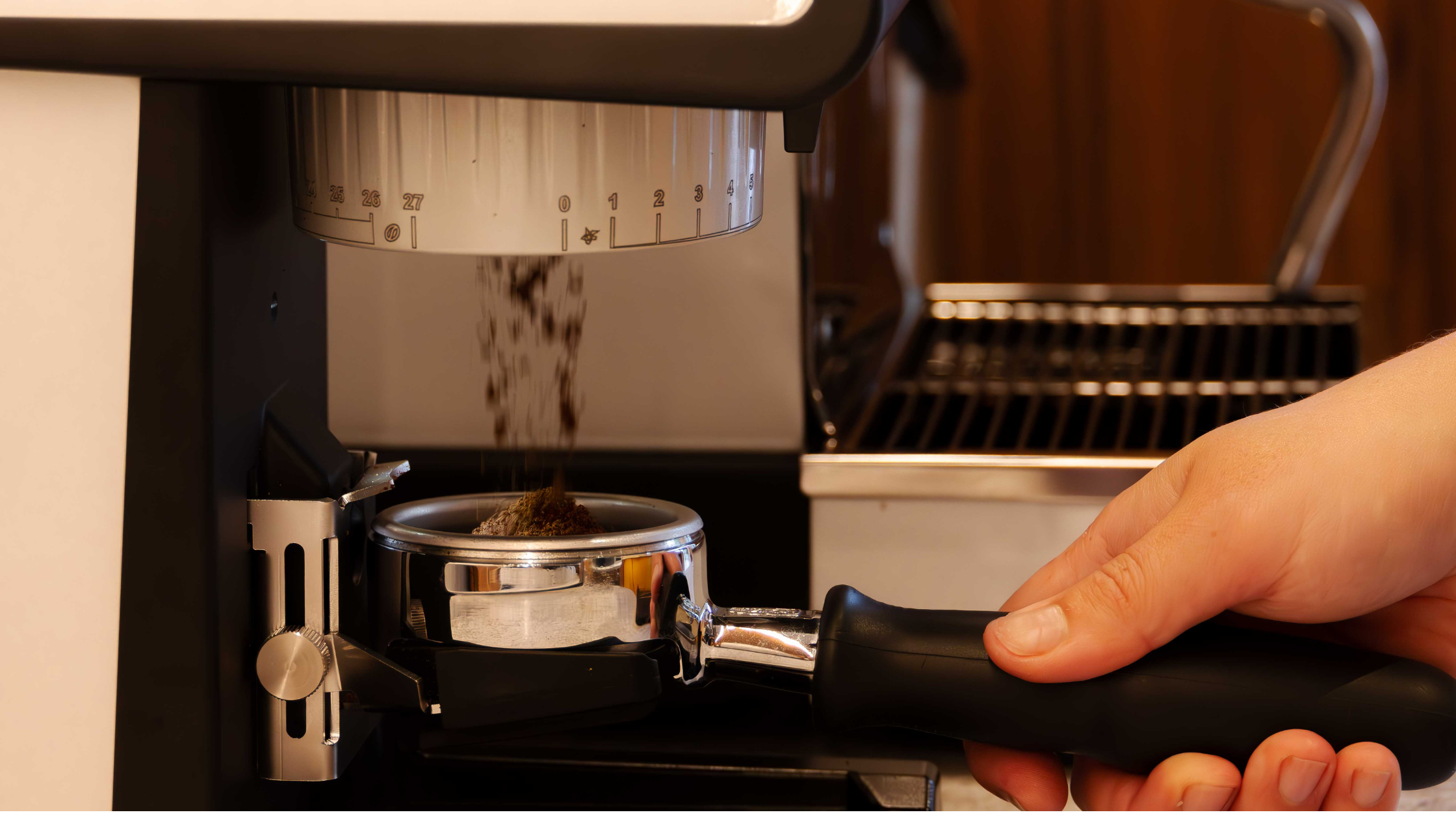
It is a common scene in the journey of a home barista: you’ve invested in a beautiful espresso machine (perhaps a Linea Micra or a GS3), you’ve sourced your favourite seasonal beans, and you’ve mastered your tamping technique. But the shots are still coming out thin, sour, or just frustratingly inconsistent.
More often than not, the culprit isn’t the machine. It’s the grind.
The specialty coffee world often treats the grind of a coffee bean with more care than the beans themselves, because the grind defines how much quality you can extract from any bean on earth. It’s the flavour’s gatekeeper, so if it isn’t precise, then the rest of your espresso machinery won’t compensate completely. But what defines a “good” coffee grinder?
We’ve got five core qualities every at-home coffee grinder in Australia should be living up to, so you can begin your search on solid ground.
1. Particle consistency.
If you had the time and patience to whip out a microscope before sipping your morning coffee (more power to you), you would notice that some coffee grounds are not the same size. In any grind, you’ll have “fines” (tiny, dust-like particles) and “boulders” (the larger chunks).
A low-quality coffee grinder in Australia produces a whole range of sizes, so when water hits those grounds, the tiny particles over-extract (becoming bitter) while the big chunks under-extract (becoming sour).
The best coffee grinders produce a “unimodal” distribution of particle sizes, where as many particles as possible are the exact same size. This means your coffee will turn out a balanced, clear extraction that highlights the true flavour of the bean, and you can easily dial in your dose instead of fighting that stray sourness.
2. Burrs vs. blades.
As many at-home and professional baristas will tell you, the best coffee grinder in the business will always be one with burrs. Blade grinders chop coffee into uneven shards while generating heat that pre-cooks the delicate oils in the bean. So, not only do you get an uneven extraction from the differently sized particles, but you also have pre-extracted dullness in the coffee oils in your final shot.
Any high-quality coffee grinder in Australia should use burrs, which are two revolving abrasive surfaces that crush the beans rather than cutting them. This is essential for achieving that uniform particle size.
In this world, you’ll have your choice of flat or conical burrs. The former is preferred by professionals in cafes, while the latter is ideal for at-home baristas who want a bright flavour profile and a lower RPM in their coffee grinder.
3. Options for manual and dosed grind.
Making coffee is, by and large, an artform. So, one of the most personal choices you’ll make when learning to brew coffee is how you interact with the grind. With a high-quality coffee grinder, the choice usually comes down to electric dosing or manual grinding.
Electric dosing.
Modern electric grinders often use “timed dosing” or “grind-by-weight.” This is about repeatability and speed. You push a button, and the grinder delivers exactly 18 grams of coffee into your portafilter. It is a seamless, professional workflow designed for consistency, so you can pull the best shot every time.
Manual grinding.
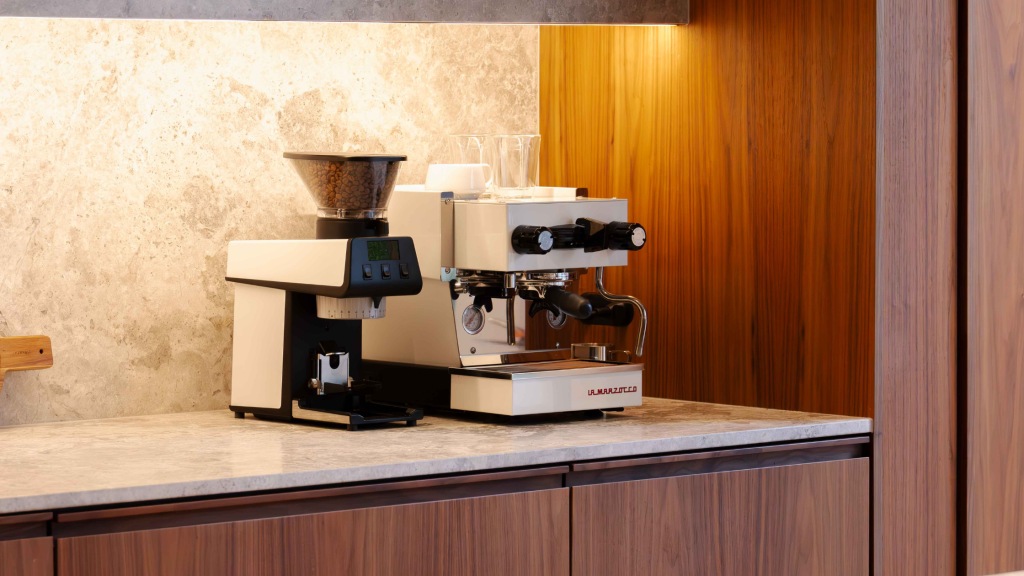
For many, the tactile experience of a manual hand grinder is the ultimate ritual. It allows you to feel the beans’ resistance and connect with the process. While it requires more effort, a high-end manual grinder can often rival the particle consistency of electric grinders twice its price. It is the choice of the purist who values the journey as much as the destination. In our opinion, the best machines offer you the chance to do both. This is why the La Marzocco Pico Coffee Grinder offers both 2 Dose and Manual Grinding.
4. Low retention.
“Retention” is just a fancy word for the amount of ground coffee that ends up stuck inside your coffee grinder’s internal chute. If your grinder holds 3 grams of coffee per grind, your first shot of the day will always be made with 3 grams of stale grounds from the day before. That compromises your shot and can muck up the internal mechanism of your coffee grinder over time.
The best coffee grinders in Australia are designed with near-zero retention, ensuring almost all coffee grounds are shaken loose as they’re ground. This means that what you’re putting in is what you’re getting out, so every dose is as fresh as possible to keep that integrity of flavour alive.
5. Build quality and thermal stability.
Finally, any coffee grinder worth its salt has a high-quality build that considers thermal stability. This sounds like a lot of jargon, but it really means two things:
- Your coffee grinder is going to stick with you for the long run.
- Your coffee grinder doesn’t throw too much heat as it’s grinding, so the beans’ oils aren’t cooked prematurely.
The dissipated heat and robust build of a high-quality grinder are worth a spot on any at-home barista’s kitchen counter, no contest.
At the end of the day, picking a high-quality coffee grinder in Australia is easy when you know what you’re looking for. When you can pair a world-class espresso machine like the GS3 or the Micra with a top-notch grinder like the Pico, you end up with a “god shot” every day of the week.
Take home the best coffee grinder in Australia, the Pico.
Designed for at-home baristas everywhere, the La Marzocco Pico coffee grinder offers manual and dosed grinding options, conical burrs for consistent particle size, and a high-quality build with controlled thermal stability. In other ways, it’s the best you can get for your morning cuppa.
Explore the Pico and the rest of our range today.